Pueblo Mágico de Jalisco
San Sebastián del Oeste, Pueblo Mágico
San Sebastián del Oeste es uno de los Pueblos Mágicos de Jalisco desde 2011: un antiguo pueblo minero en la Sierra Occidental que conserva su arquitectura colonial, su historia y su identidad hasta hoy.
Origen e historia
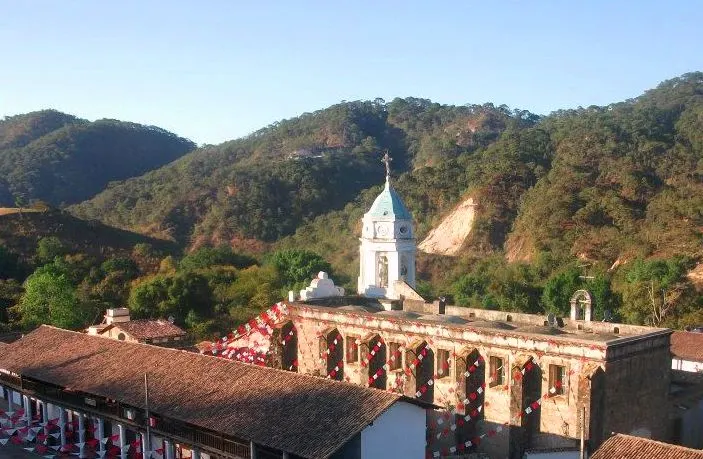
El nombre original del asentamiento era Ostotipac (u Hostotipac), del náhuatl, que significa "sobre la cueva". Los tecos residieron ahí hasta 1524, cuando llegaron a asentarse los españoles; las minas se descubrieron hacia 1530. En su apogeo colonial, San Sebastián del Oeste fue una importante ciudad minera de más de 20 mil habitantes. El cierre de las minas durante el siglo XIX provocó la migración de buena parte de sus pobladores.
Fuente: SECTUR México (gob.mx)El pueblo hoy
Se incorporó al programa Pueblos Mágicos en 2011. Actualmente lo habitan alrededor de 6,000 personas, a 950 metros de altitud, con clima cálido subhúmedo y una temperatura media anual de 20 °C.
Fuente: SECTUR México (gob.mx)Gastronomía y artesanías
La cocina local incluye birria, enchiladas, pozole, tamales y tostadas, con postres como cajetas y rollos de fruta, y bebidas como atole, café y ponche. En artesanías destacan la madera tallada, las sillas de montar, la talabartería y los textiles.
Fuente: SECTUR México (gob.mx)Qué ver
El centro histórico conserva iglesias, haciendas y minas antiguas como testigos de su pasado, entre ellas la Hacienda Jalisco, construida hace casi dos siglos para resguardar el tesoro minero antes de su envío a España. Otros atractivos recomendados incluyen el Cerro de la Bufa, una fábrica artesanal de puros, y Quinta Mary, productora de café orgánico de altura.
Fuente: Pueblos Mágicos, México DesconocidoDatos verificados el 11 de agosto de 2026; sujetos a cambio.